

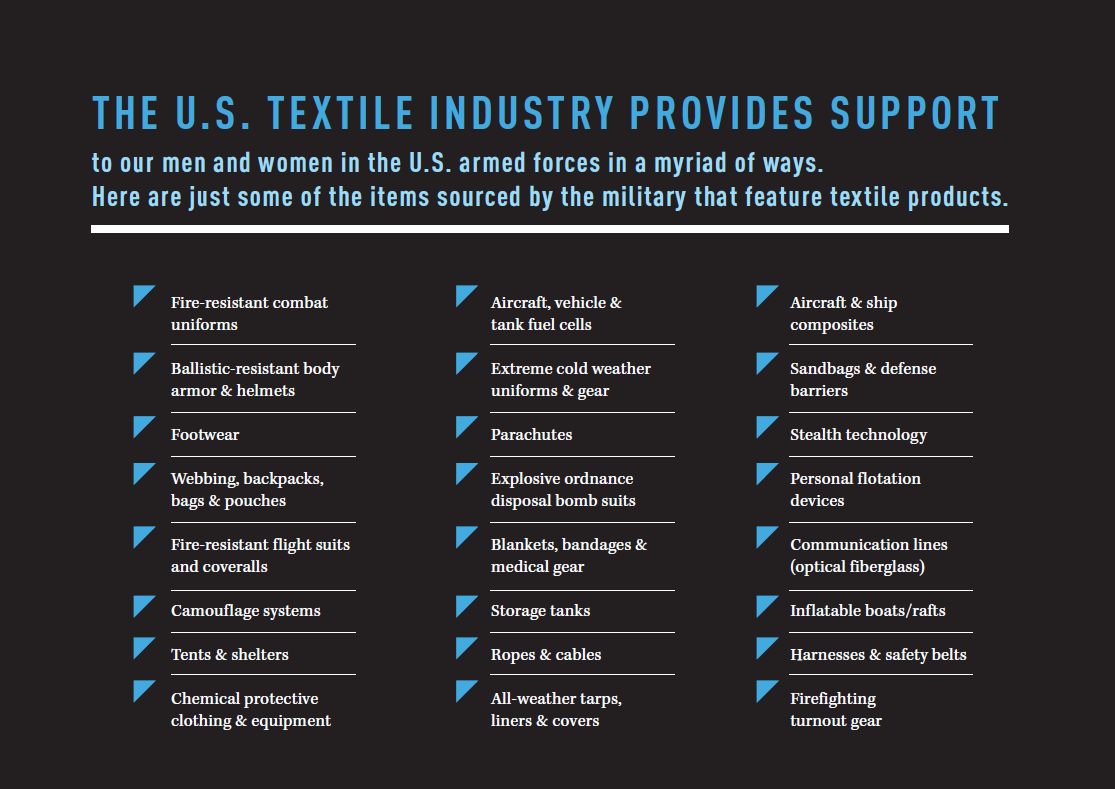
U.S. Military
The United States Armed Services, comprised of the Army, Navy, Air Force and Marines, rely heavily on the procurement of clothing and textiles (C&T) and individual equipment items by the Defense Logistics Agency – Troop Support in Philadelphia, PA (DLA – TS). This Department of Defense (DoD) purchasing activity estimates that more than 8,000 different textile items are purchased annually for use by the U.S. military and other allied organizations, and this figure actually rises to more than 31,000 line items when individual sizes are factored into the item mix.
The Berry Amendment is not the only law governing government procurement. For civilian government procurement, different rules apply.
In 2010, a new requirement, known as the Kissell Amendment, requires Berry Amendment-like procurement rules for certain agencies within the Department of Homeland Security. At present, this includes the U.S. Coast Guard and the Transportation Security Administration.
Textiles and General Government Procurement
KEY FACTS
The National Council of Textile Organizations is comprised of five councils to ensure a broad representation of the industry supply chain.
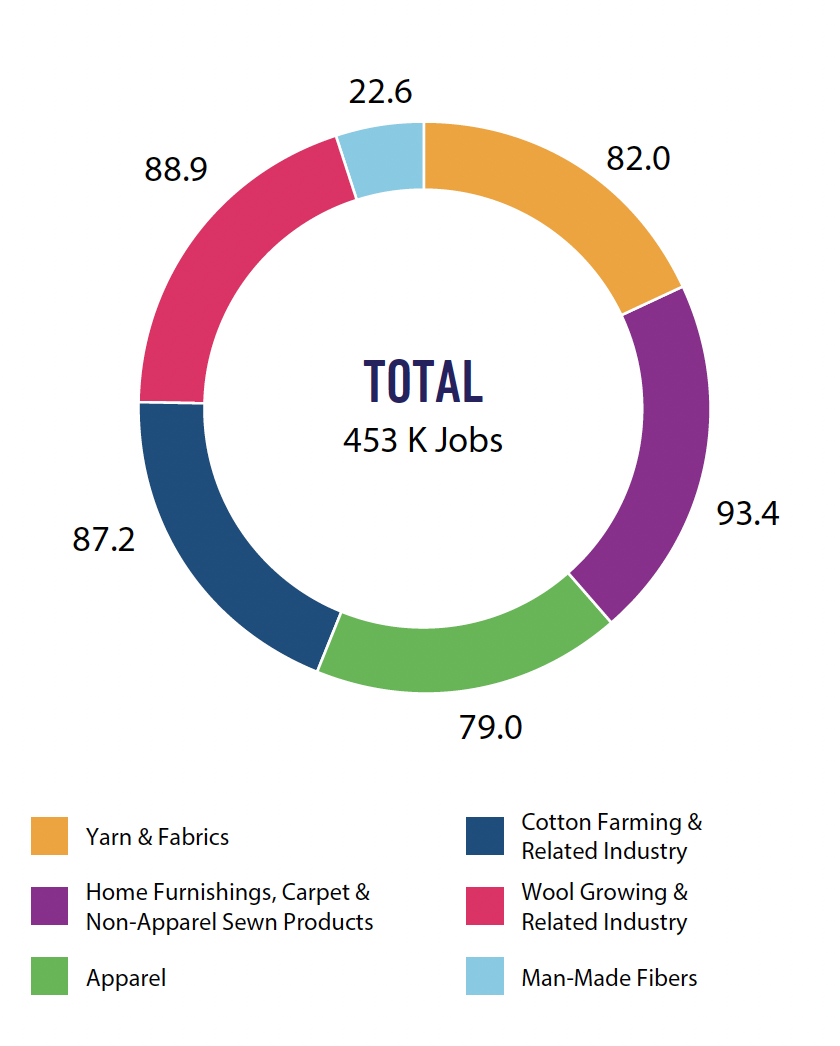
The U.S. textile industry supply chain—from textile fibers to apparel and other sewn products—employed 453,122 workers in 2025. The U.S. government estimates that 1 textile manufacturing job in this country supports 3 other jobs.
Employment
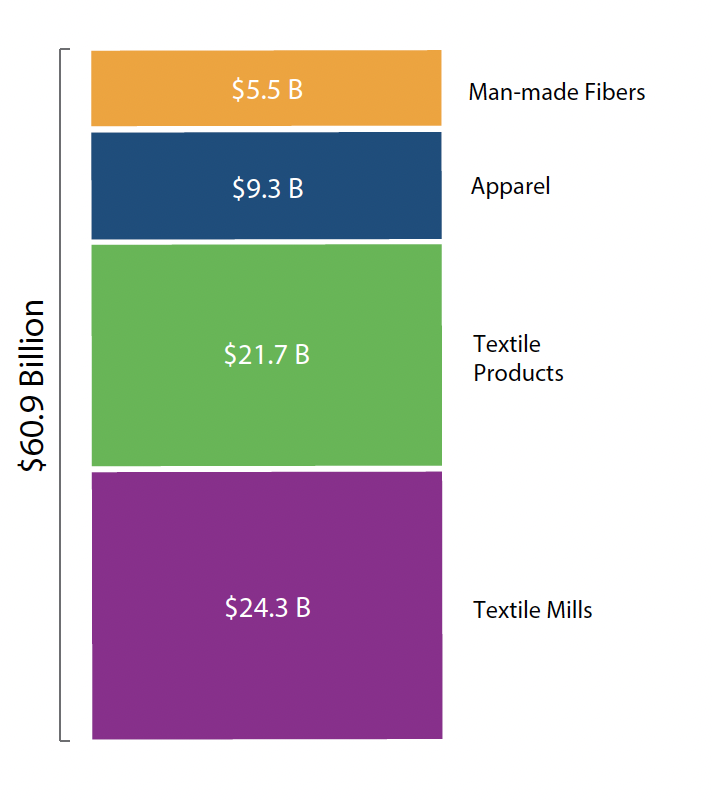
Shipments
U.S. textile and apparel shipments totaled $60.9 billion in 2025.

The U.S. textile industry supplies more than 8,000 different textile products to the U.S. military.
U.S. Military
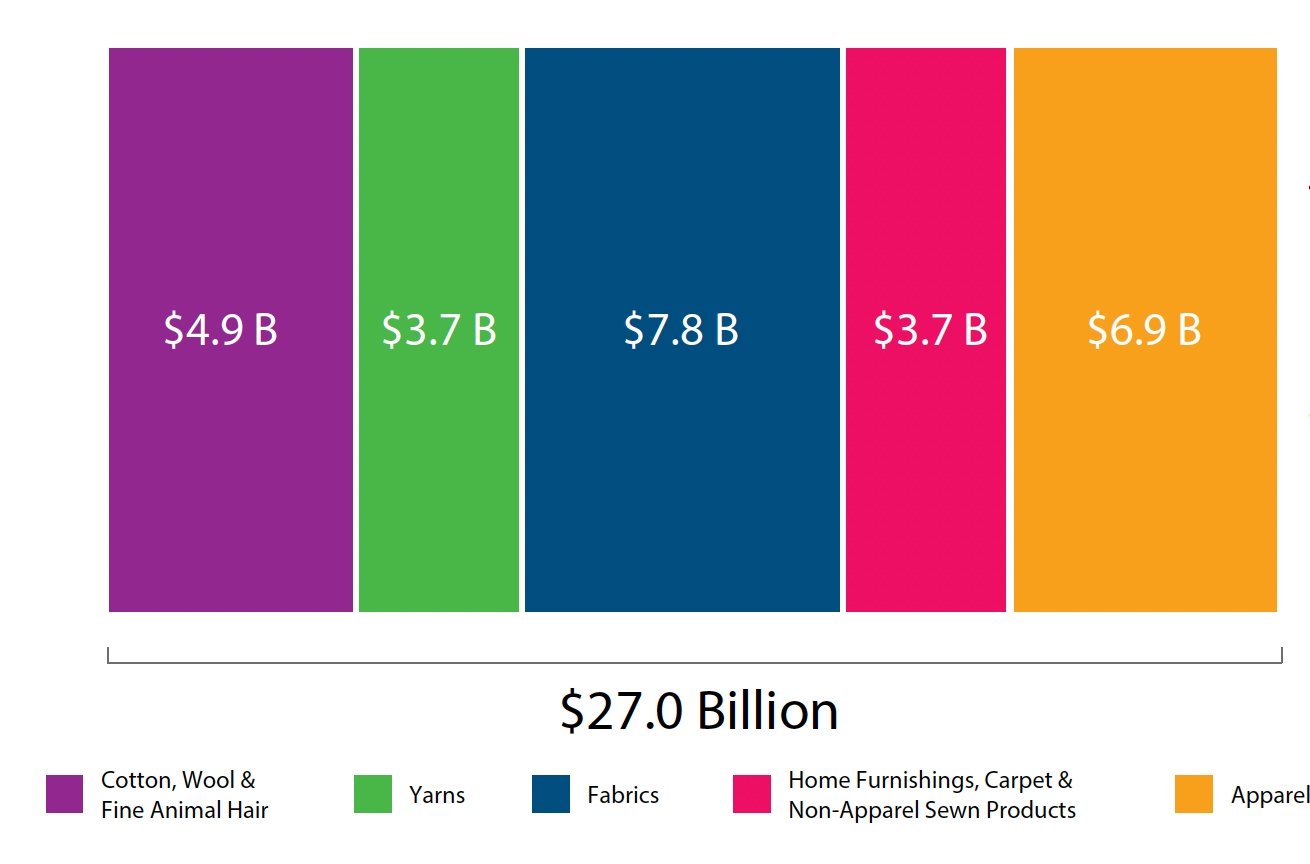
Exports
The U.S. industry is the 2nd largest exporter of textile-related products in the world. Fiber, textile, and apparel exports combined were $26.9 billion in 2025.
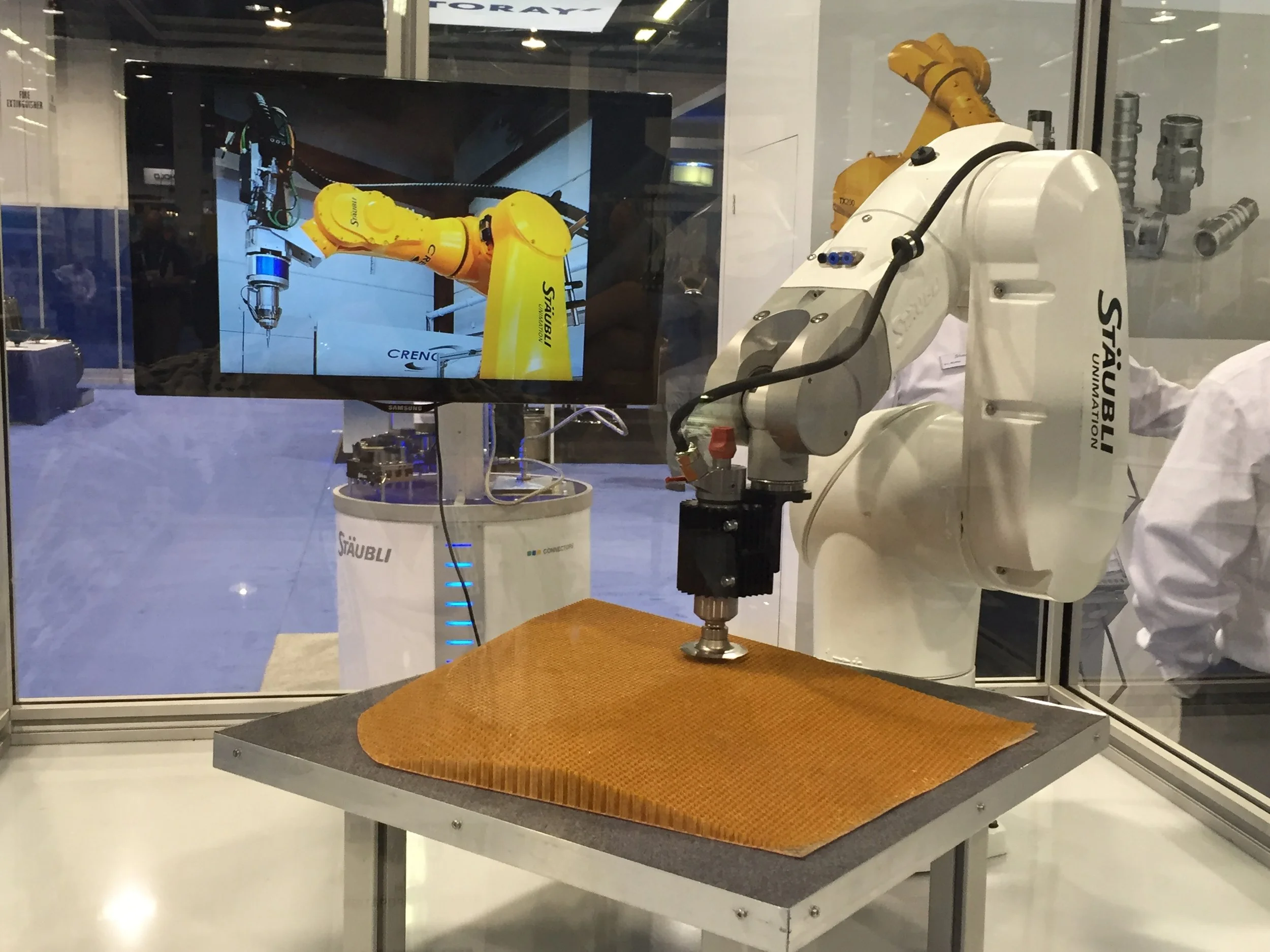
The United States is the world leader in textile research and development, with the U.S. textile complex developing next generation textile materials such as conductive fabric with anti-static properties, electronic textiles that can monitor heart rate and other vital signs, antimicrobial fibers, lifesaving body armor, and new fabrics that adapt to the climate to make the wearer warmer or cooler.
R&D
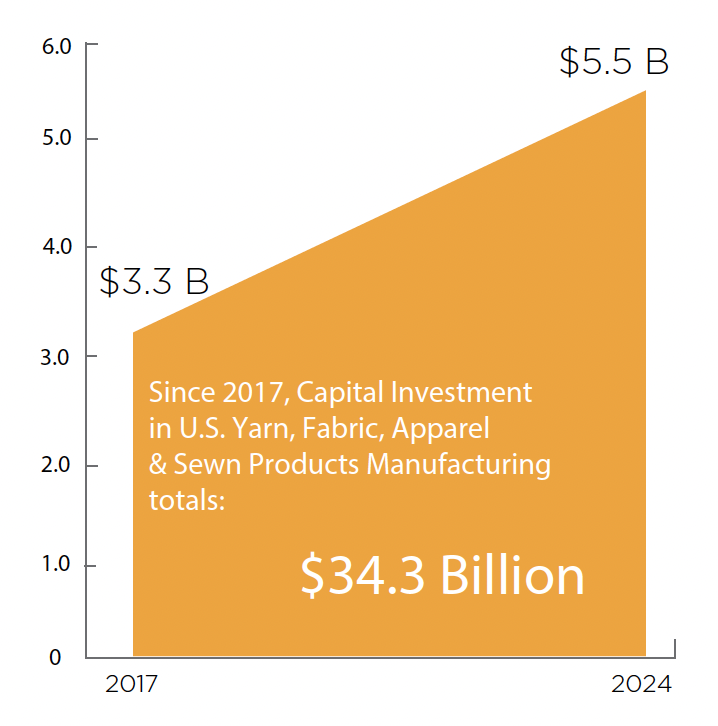
Capital Investments
The U.S. textile industry invested $34.3 billion in new plants and equipment from 2017 to 2024. Recently U.S. manufacturers have opened new facilities throughout the textile production chain, including recycling facilities to convert textile and other waste to new textile uses and resins.
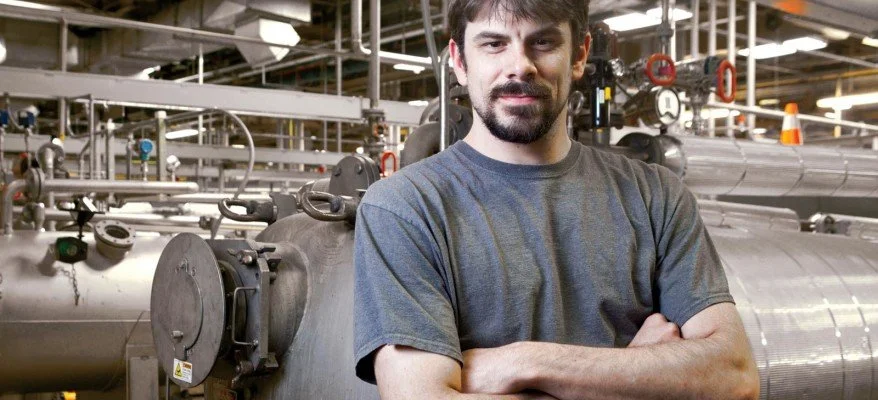
In 2022, hourly and nonsupervisory textile mill workers on average earned more than 2x as much as apparel store workers ($854 per week vs. $412) and received healthcare and retirement benefits.