

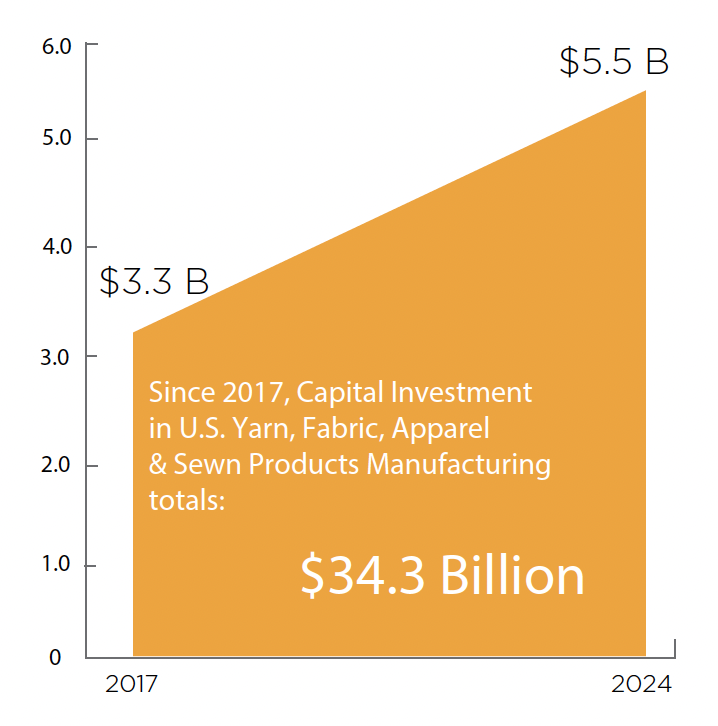
Capital Investments
The U.S. textile industry remains globally competitive due to the continued investment in the domestic industry. The industry invested $34.3 billion in new plants and equipment from 2017 to 2024. Investment is required in processes as well as product development. Recently producers have opened new fiber, yarn, and recycling facilities to convert textile and other waste to new textile uses and resins. Over the last five years, the pace of investment has increased as foreign manufacturers turn to the United States for production.
Investment in Textile Mills and Textile Product Mills has seen especially explosive growth, climbing from $2.20 billion in 2017 to $4.20 billion in 2024 – an increase of 91 percent.
KEY FACTS
The National Council of Textile Organizations is comprised of five councils to ensure a broad representation of the industry supply chain.
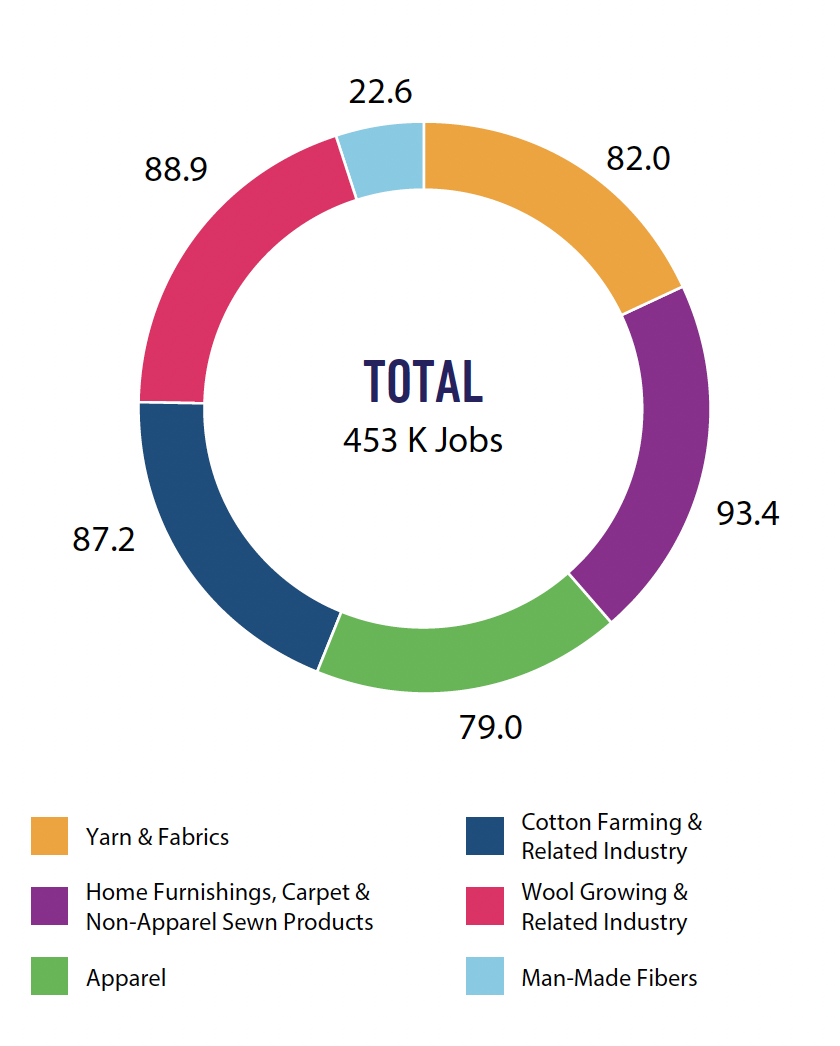
The U.S. textile industry supply chain—from textile fibers to apparel and other sewn products—employed 453,122 workers in 2025. The U.S. government estimates that 1 textile manufacturing job in this country supports 3 other jobs.
Employment
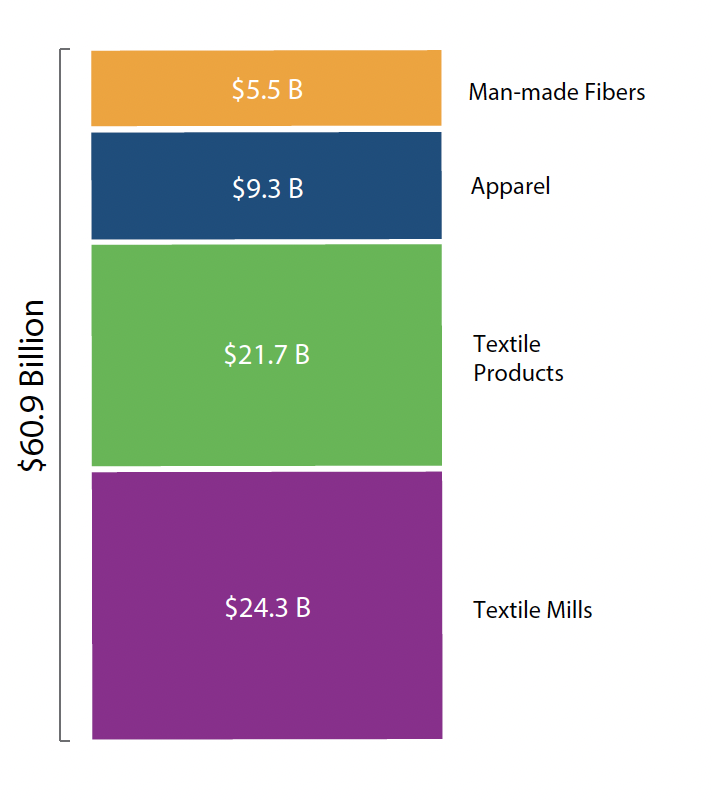
Shipments
U.S. textile and apparel shipments totaled $60.9 billion in 2025.

The U.S. textile industry supplies more than 8,000 different textile products to the U.S. military.
U.S. Military
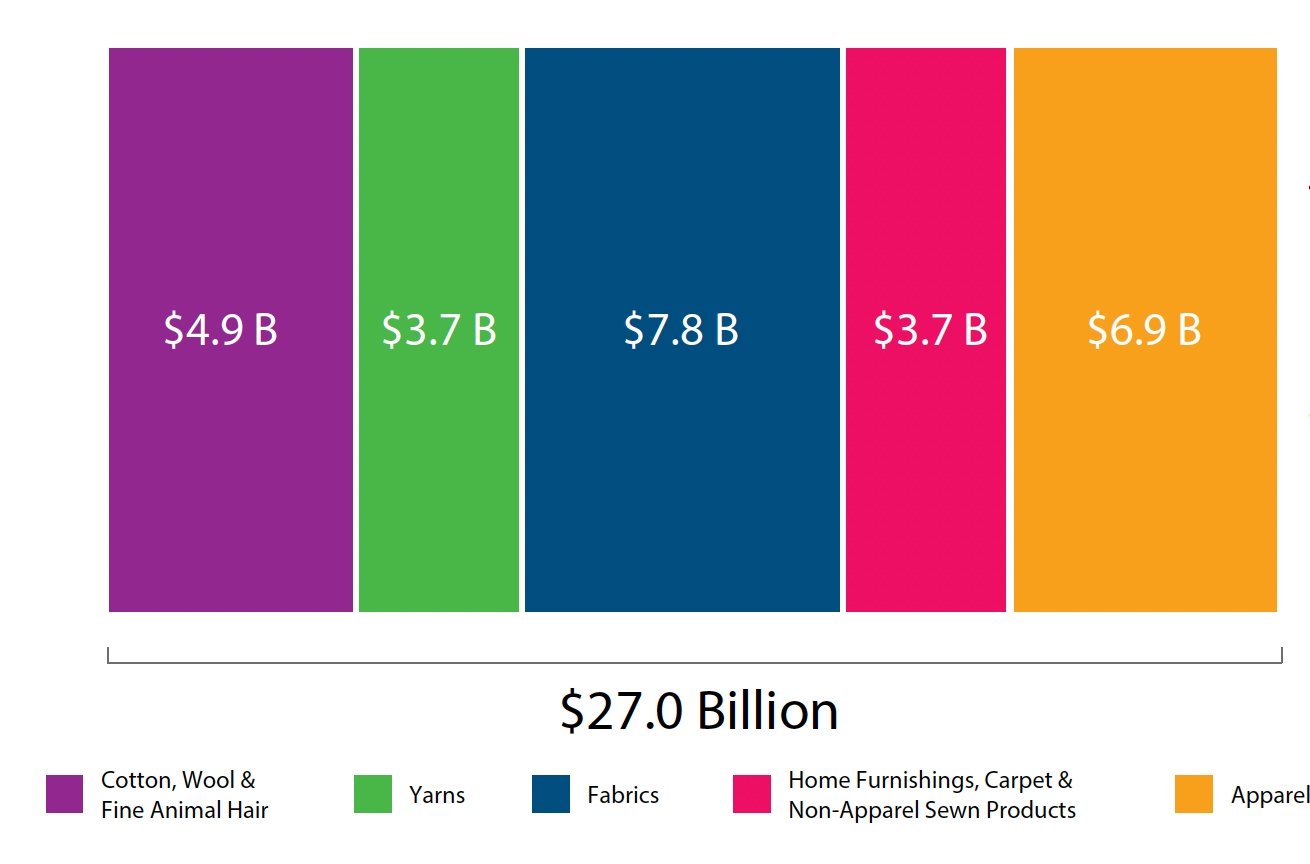
Exports
The U.S. industry is the 2nd largest exporter of textile-related products in the world. Fiber, textile, and apparel exports combined were $26.9 billion in 2025.
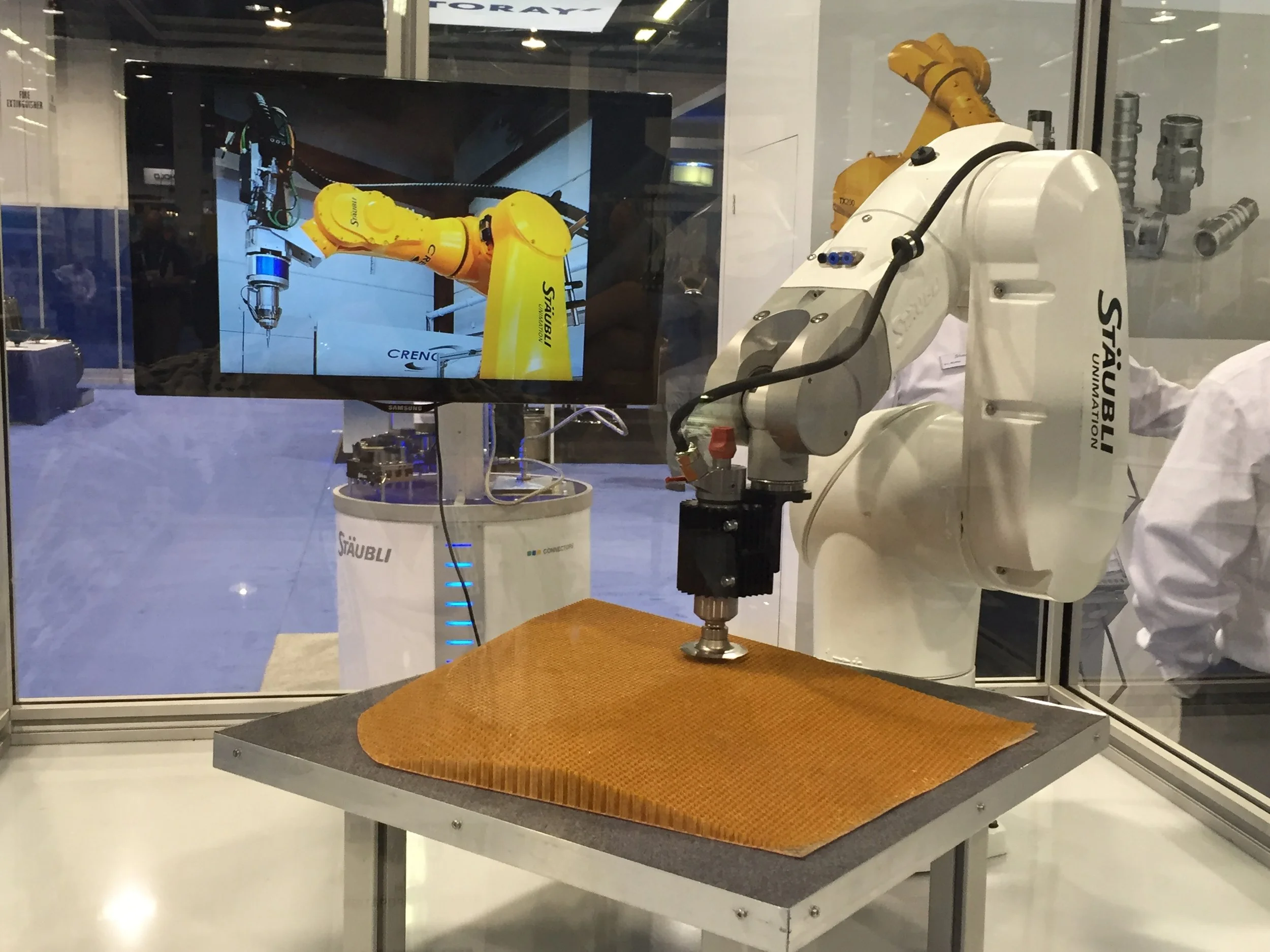
The United States is the world leader in textile research and development, with the U.S. textile complex developing next generation textile materials such as conductive fabric with anti-static properties, electronic textiles that can monitor heart rate and other vital signs, antimicrobial fibers, lifesaving body armor, and new fabrics that adapt to the climate to make the wearer warmer or cooler.
R&D
Capital Investments
The U.S. textile industry invested $34.3 billion in new plants and equipment from 2017 to 2024. Recently U.S. manufacturers have opened new facilities throughout the textile production chain, including recycling facilities to convert textile and other waste to new textile uses and resins.

In 2022, hourly and nonsupervisory textile mill workers on average earned more than 2x as much as apparel store workers ($854 per week vs. $412) and received healthcare and retirement benefits.