


U.S. Textile Industry
The U.S. textile industry, its domestic suppliers and customers are comprised of the following: yarn and fabric manufacturers, suppliers in the cotton, wool, and man-made fiber sectors, dyers, printers, and finishers, the machinery and textile chemical industries, and our customers in the U.S. apparel industry.
The U.S. textile industry, suppliers and our customers are an important component of the U.S. economy and are found in every region of the country. The industry provides much needed jobs in rural areas and has functioned as a springboard for workers out of poverty into good paying jobs for generations.
The industry is also a key contributor to our national defense and supplies over 8,000 products a year to our men and women in uniform.
Finally, the industry is major factor in high-tech innovation. Textile products are now major components in everything from heart valves and stents to aircraft bodies and advanced body armor.
Government statistics show that in major textile producing states, one textile job supports three additional jobs in a community. This is because a single textile product requires inputs from many sources in order to be produced.
The supply chain includes the raw material (the cotton grower or fiber producer), the yarn, the fabric and processes to dye, print and finish the final product. And beyond the immediate textile sector, textile jobs support other jobs in the chemical, energy, shipping, rail, banking, water, and energy production sectors.
A textile plant is often the single largest user of electricity in a community as well as a significant source of property tax revenue. A textile plant’s payroll is also often the largest of any employer’s in many small towns and its workers support restaurants, banks, insurance companies, grocery and retail stores, churches and other non-profit organizations, and many other local entities.
Multiplier Effect
Select Components of Textile Industry Supply Chain
Cotton Growers, Ginners, Warehousing, and Cotton Shipping
Manmade Fiber Producers
Yarn Spinners and Extruders
Knitters and Weavers
Dyeing and Finishing
Fabric, Apparel, and Furniture Designers
Cutting and Sewing
Shipping
Banking and Insurance
Machinery, Parts, and Service
Chemicals
Water and Energy Providers
Retail and Merchandizing
KEY FACTS
The National Council of Textile Organizations is comprised of five councils to ensure a broad representation of the industry supply chain.
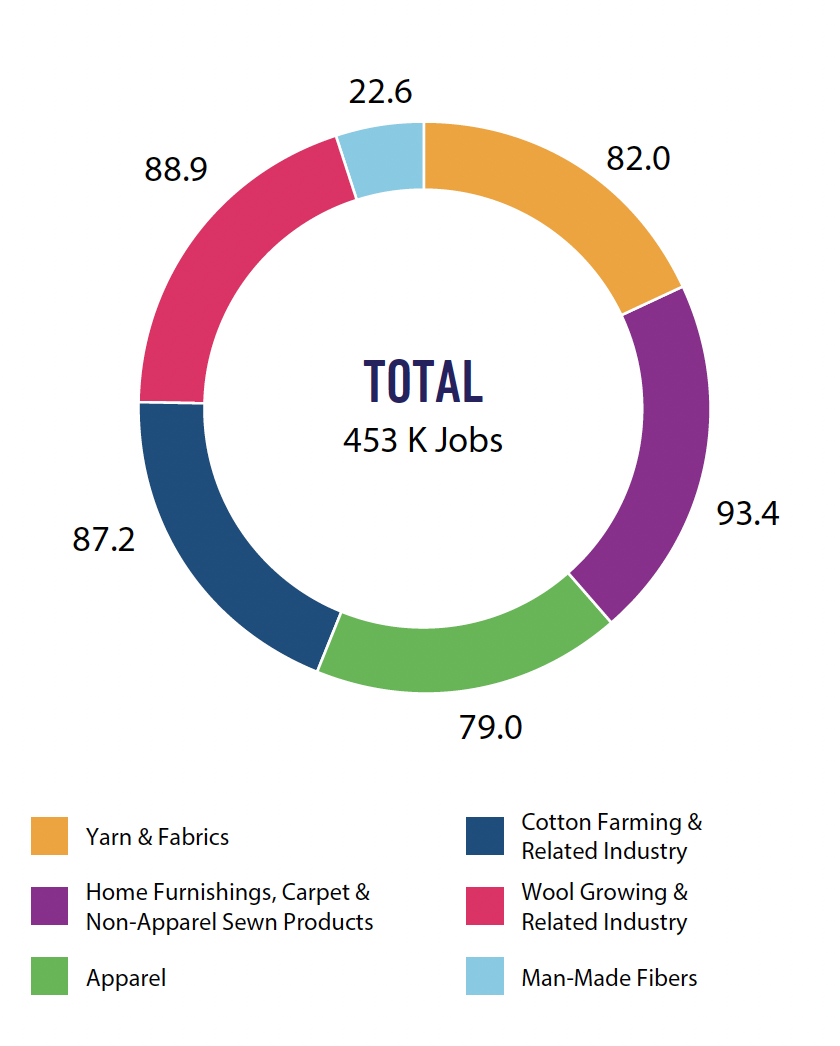
The U.S. textile industry supply chain—from textile fibers to apparel and other sewn products—employed 453,122 workers in 2025. The U.S. government estimates that 1 textile manufacturing job in this country supports 3 other jobs.
Employment
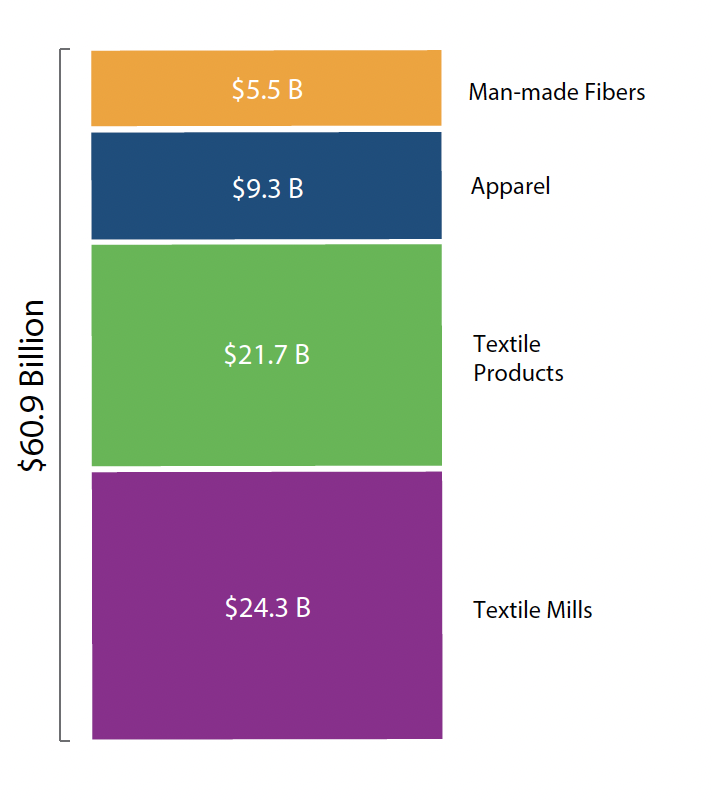
U.S. textile and apparel shipments totaled $60.9 billion in 2025.
Shipments

U.S. Military
The U.S. textile industry supplies more than 8,000 different textile products to the U.S. military.
Exports
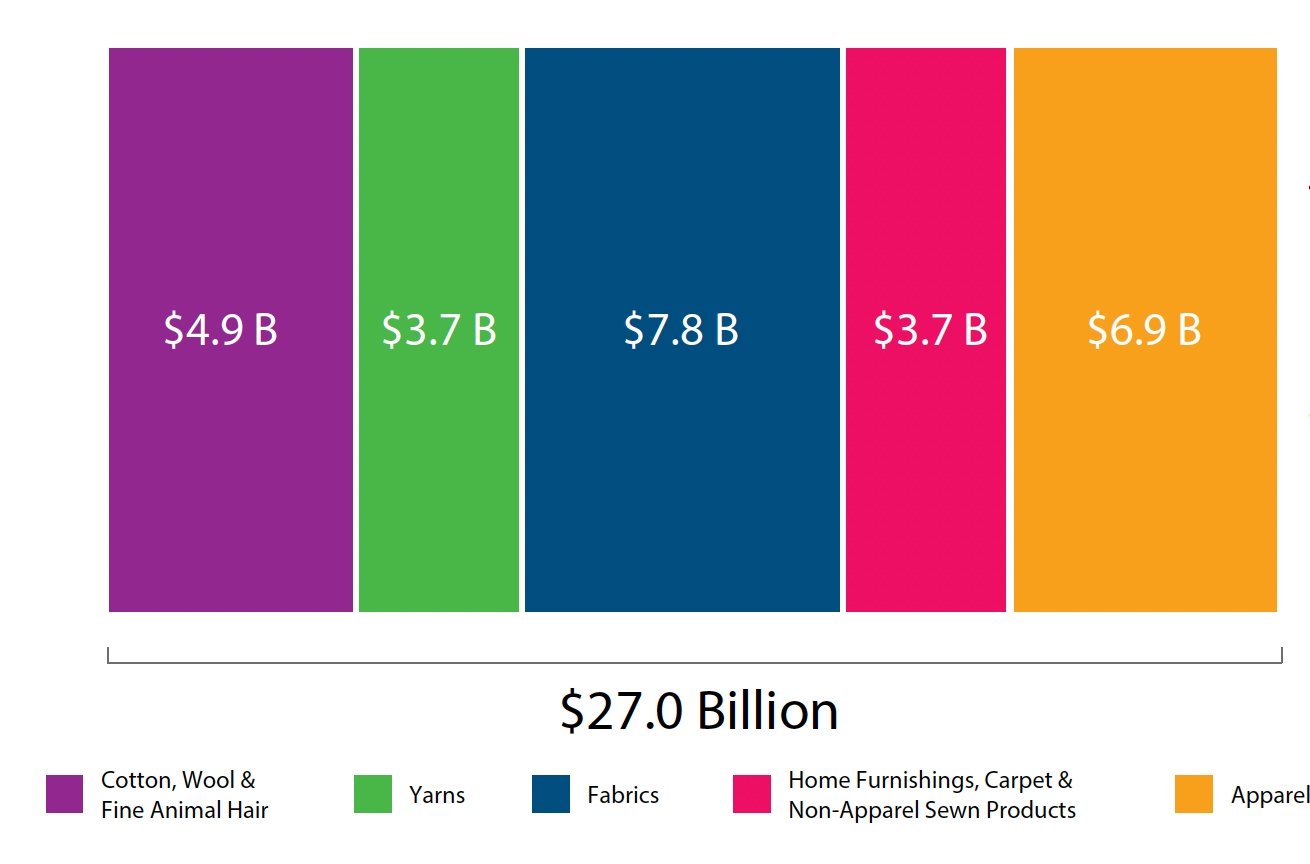
The U.S. industry is the 2nd largest exporter of textile-related products in the world. Fiber, textile, and apparel exports combined were $26.9 billion in 2025.

The United States is the world leader in textile research and development, with the U.S. textile complex developing next generation textile materials such as conductive fabric with anti-static properties, electronic textiles that can monitor heart rate and other vital signs, antimicrobial fibers, lifesaving body armor, and new fabrics that adapt to the climate to make the wearer warmer or cooler.
R&D
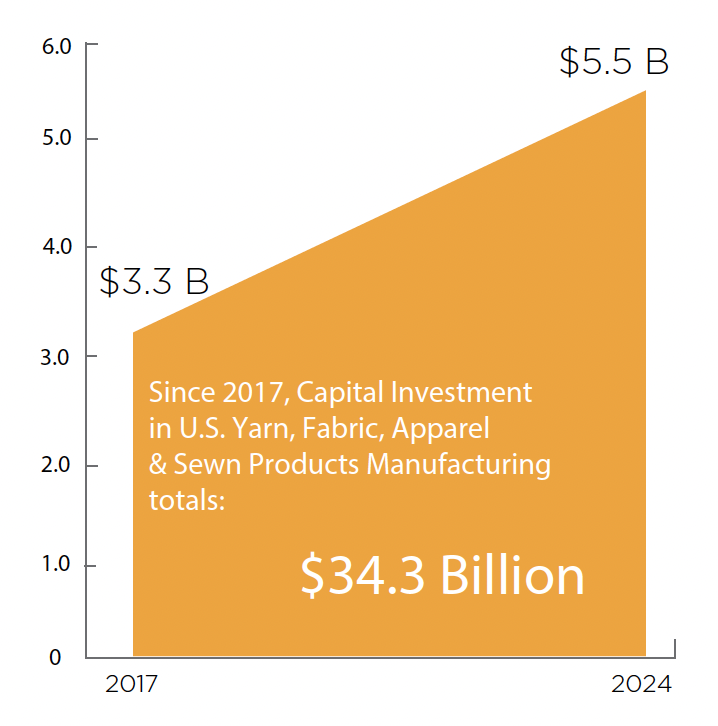
Capital Investments
The U.S. textile industry invested $34.3 billion in new plants and equipment from 2017 to 2024. Recently U.S. manufacturers have opened new facilities throughout the textile production chain, including recycling facilities to convert textile and other waste to new textile uses and resins.

In 2022, hourly and nonsupervisory textile mill workers on average earned more than 2x as much as apparel store workers ($854 per week vs. $412) and received healthcare and retirement benefits.
Wages
Interested in joining our association?
Complete the following form to get in touch and learn more about how NCTO can help your organization.